

Project Background:
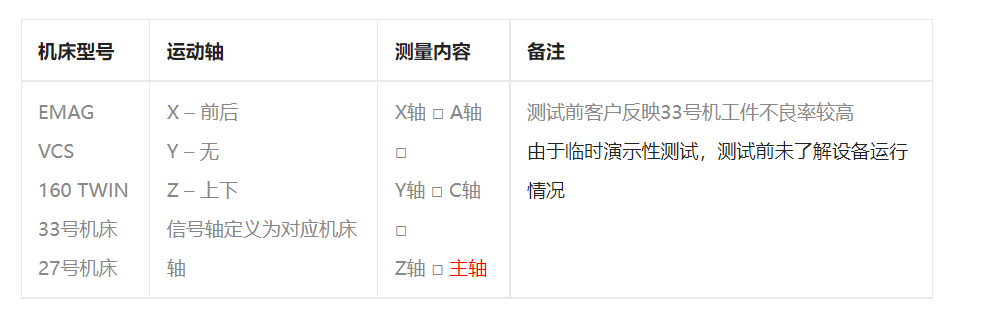
The machine is an EMAG dual-spindle vertical lathe, with a maximum spindle speed of 6500rpm and an actual maximum processing speed of 5000rpm. The dimensions of currently machined parts are unstable, and the yield rate is significantly lower than that of other similar equipment. The customer performed self-maintenance but could not identify the specific problem, and was preparing to contact the equipment manufacturer for repair.
I. Test Conditions
On-site test of Montronix diagnostic instrument installation:
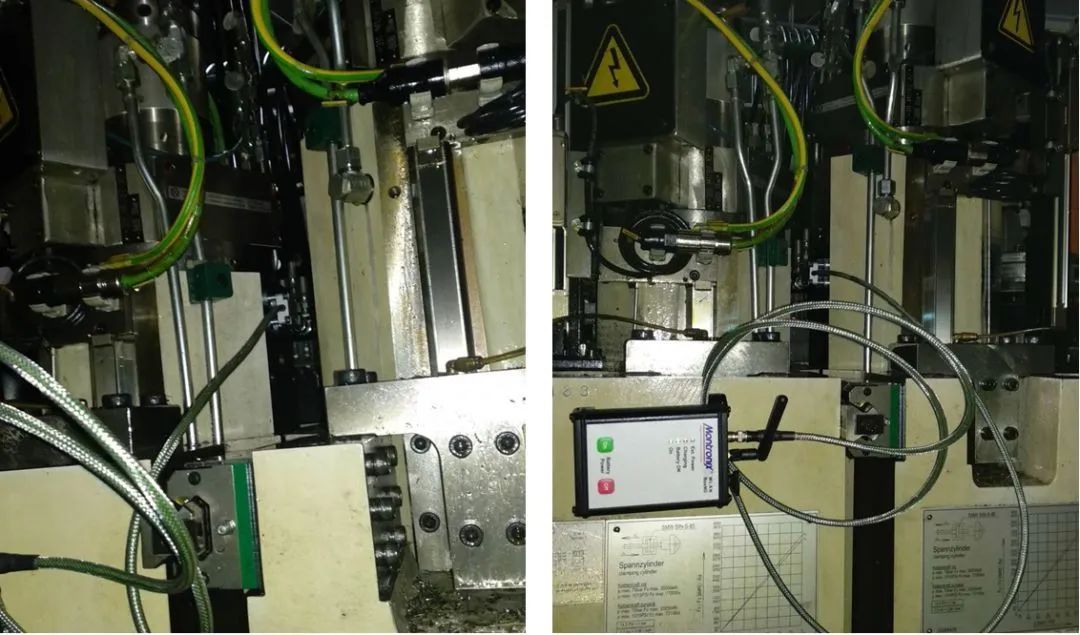
To determine the source of the fault, comparative measurements were performed on both spindles to examine the performance of each spindle.
Spindle measurement data of Machine No. 33:
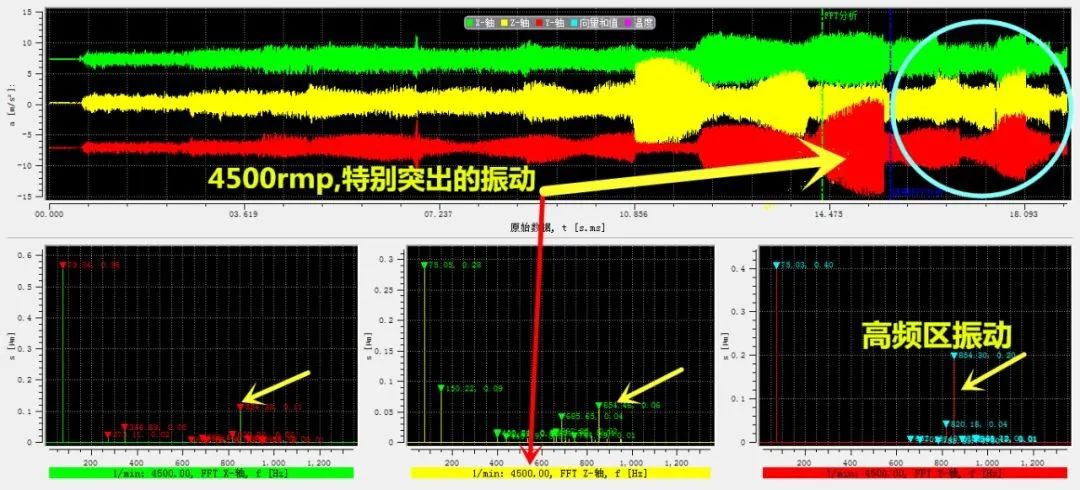
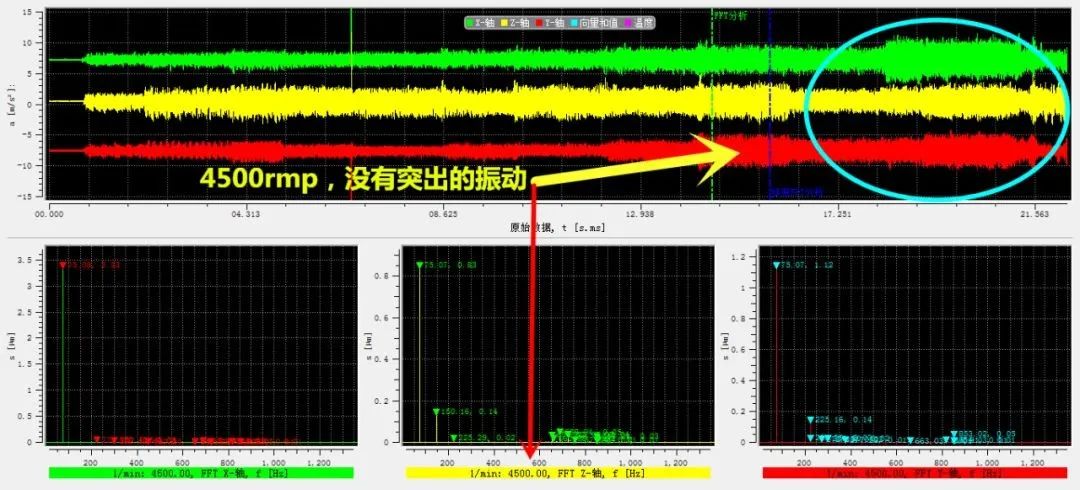
When the left spindle test speed is 0-5000rpm, increasing by 500rpm, from the raw vibration data we can see that the overall operation of this spindle is very unstable (showing a curve fluctuation on the fixed speed segment), indicating that the spindle is subjected to uneven forces during rotation. Taking 4500rpm as an example (frequency 4500rpm/60s=75Hz), an obvious resonance appears (large yellow arrow), and the red arrow shows the tested speed. Although the amplitude is not large in the spectrum, the vibration acceleration (i.e., the spindle force condition) is obviously abnormal, suggesting resonance. At the same time, a same-frequency high-frequency vibration of about 854Hz appears in all three directions, which is 11.38 times the spindle fundamental frequency, indicating that there may be an abnormality in the spindle bearing.
Looking at the left spindle again, under the same operating state, the contrast is very obvious. The difference between the two is so large that no experience is needed from the figure. Similarly, at 4500rpm, there is no obvious vibration on the image, the acceleration is very stable, and there is no arc change (compared with the blue circle marked areas in Figure 2 and Figure 3), indicating that the right spindle performance is stable. At the same time, to compare the measurement results, we introduced another Machine No. 27 with the same structure and model. This machine is a normal processing machine, and the test method is the same as the previous one.
Spindle measurement data of Machine No. 27:
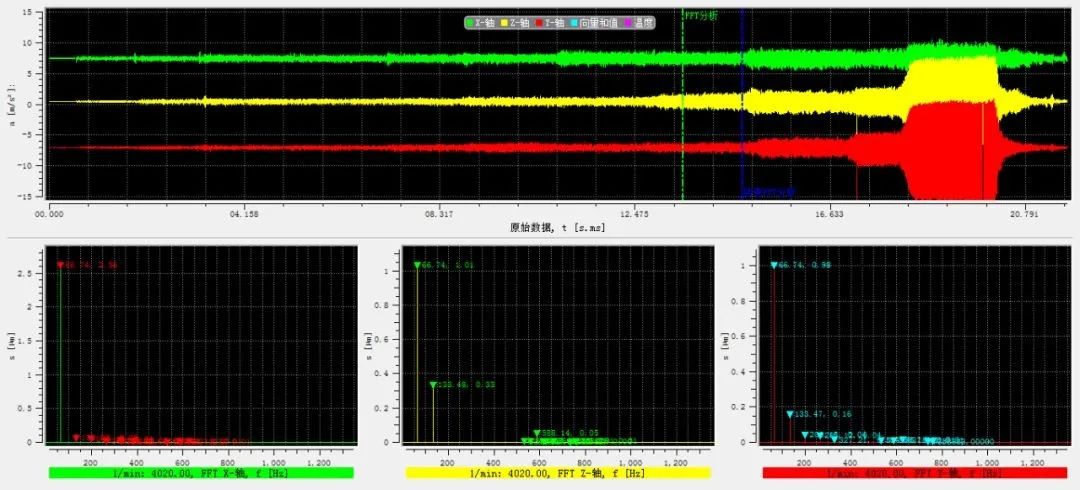
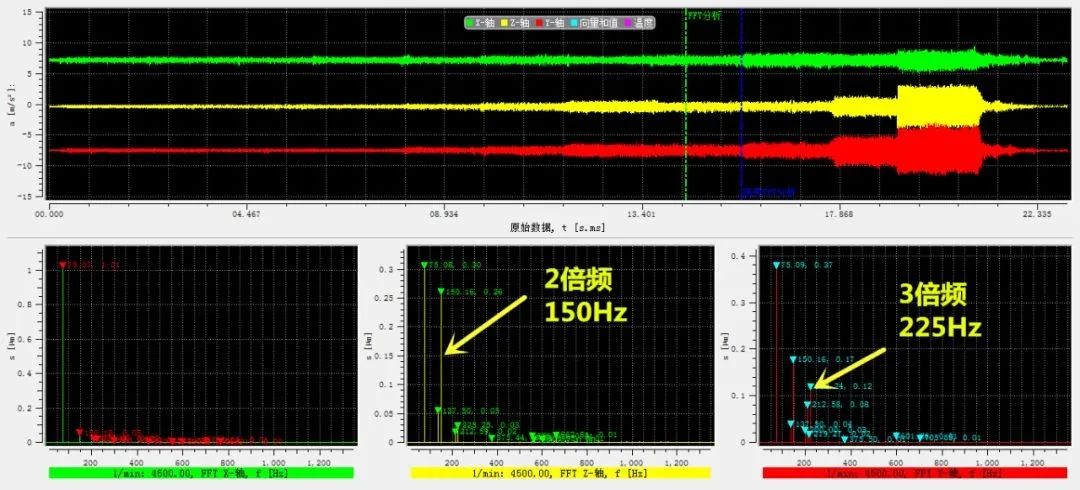
The intuitive feeling is that the graph is cleaner, indicating that the spindle operation is very stable. The increased vibration at the final 5000rpm is related to the spindle warm-up (unwarmed spindle can cause large vibration at high speed), but overall there is no arc, and the forces are balanced.
The right spindle is also very stable, with balanced forces. Only at 4500rpm, the spindle has an obvious amplitude in the Z and Y axis directions at twice and three times the fundamental frequency (75*2=150Hz, 75*3=225Hz), indicating that the spindle may have a slight misalignment in the Z and Y directions, but the amplitude is very small (<0.4μ).
II. Test Data Comparison and Analysis
Brief explanation of misalignment: Theoretically, the axis of the spindle should be on a straight line, but in fact, the spindle is a highly complex mechanical assembly, and deviations will inevitably occur due to various reasons. This deviation is very subtle. Generally, as long as it meets the standard, we consider it qualified. For misalignment, there will be the following situations in practice (schematic diagram):
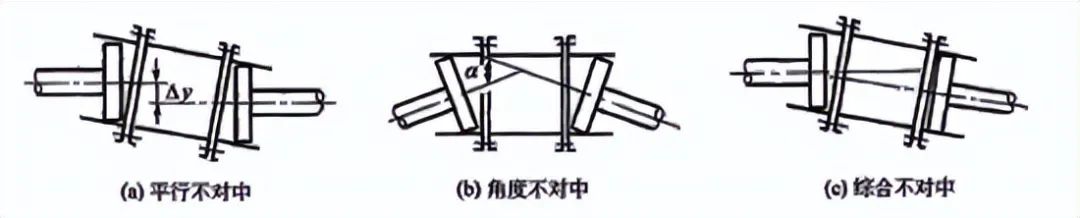
According to the on-site customer feedback, the spindle will have a sharp high-frequency sound during no-load operation, which is very likely caused by spindle misalignment, although this problem has not affected the actual machining temporarily.
III. Summary
In comparison, both spindles of Machine No. 33 are in poor condition, and the left spindle is more serious. Further analysis suggests that the bearing has been worn out, and there is a high possibility that the spindle will be scrapped. At the same time, the operating state of this spindle is unstable, and it is difficult to ensure the machining accuracy. Immediate maintenance is required. Although the right spindle is in better condition than the left, there is a significant gap compared with Machine No. 27, and there is also a problem of large amplitude, so immediate maintenance inspection is also recommended.
IV. Feedback Verification
One week after the inspection, the customer proactively provided feedback that Machine No. 33 had been reported to EMAG for repair (because it could no longer be processed). The manufacturer inspection determined that the spindle bearing had been worn out and must be replaced and repaired, with a repair cycle of about one month, which well verified the diagnostic results.
V. Inspiration
Through the above case, we can see that the diagnostic instrument can display the mechanical data well. With data and images, anyone can make intuitive comparisons, making mechanical data no longer invisible and dependent on experience. If there is a difference, the source of the difference can be investigated in depth. If there is no difference, the problem of other parts can be investigated. This simple judgment can help our equipment personnel quickly narrow the troubleshooting scope, focus on handling the fault point, greatly improve the troubleshooting efficiency, and lower the technical threshold of equipment maintenance.
Welcome to follow
MasterLink Cases - See the subtle, learn, think, practice

Scan QR Code for Case Consultation