

How to Test Collision Protection Effect
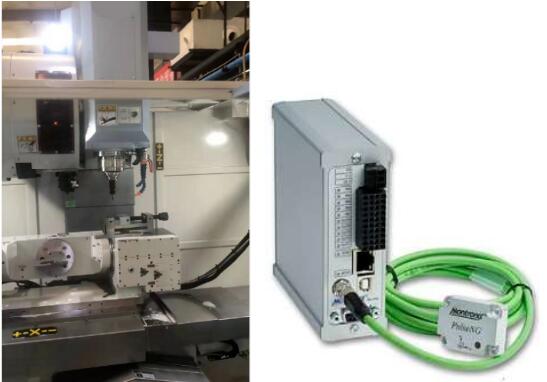
1. Test Purpose
Directly collide with the machine tool to confirm the system's application effect on actual processing equipment at the customer site.
2. Test Preparation
Use IBU-NG collision protection system to timely alarm and stop when collision occurs.
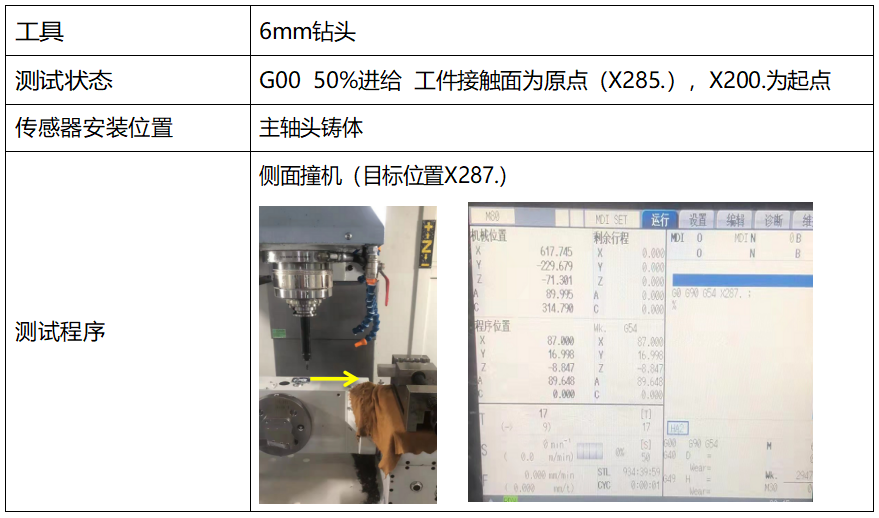
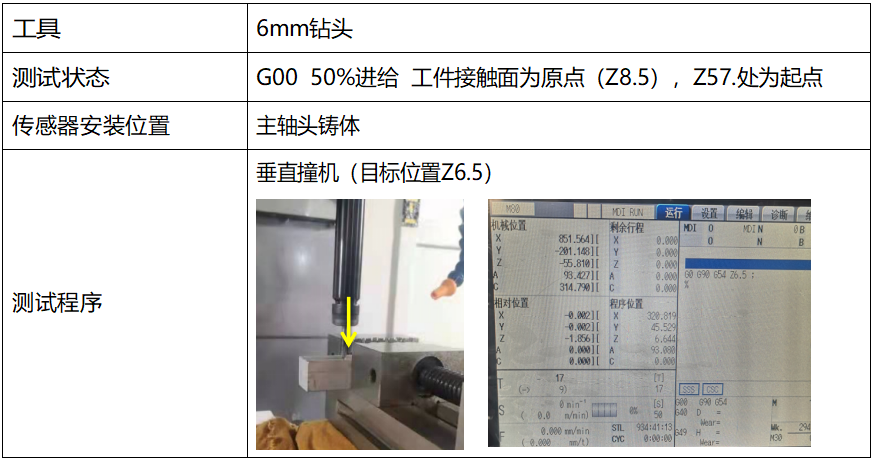
System hardware can be temporarily not connected. Due to test sensitivity and machine safety protection, as well as test economy, small diameter used cutting tools can be used as test objects (system does not perform tool monitoring, only testing). The following are the actual measurement process and effect records at the customer site for reference:
3. Test Content
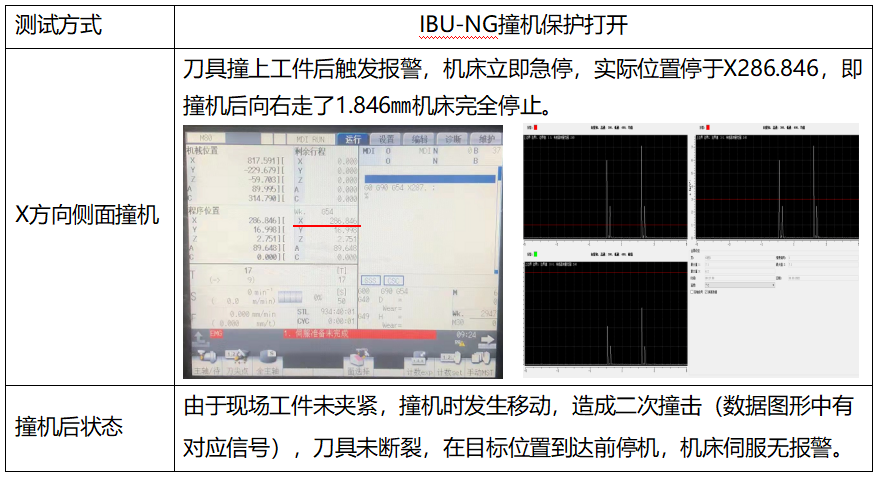
(1) 6mm Tool Collision (X-axis Direction)
(2) 6mm Tool Collision (Vertical Direction)
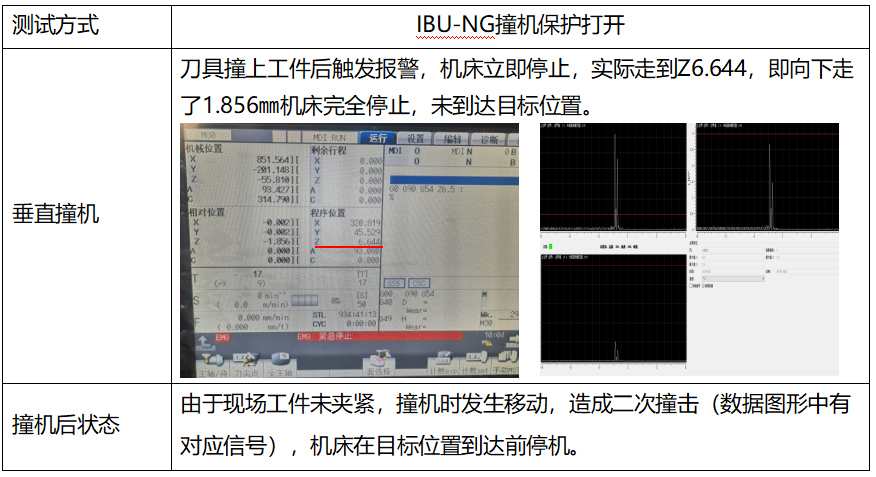
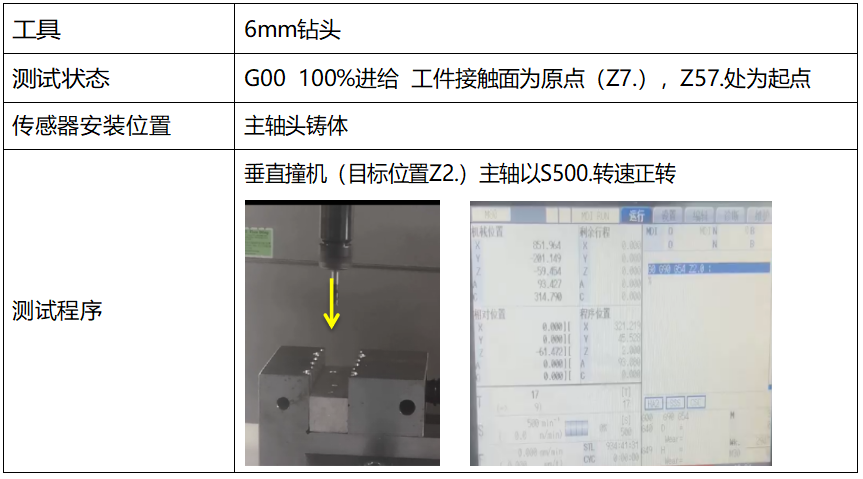
(3) 6mm Tool Collision (Vertical Direction, Spindle Rotating)
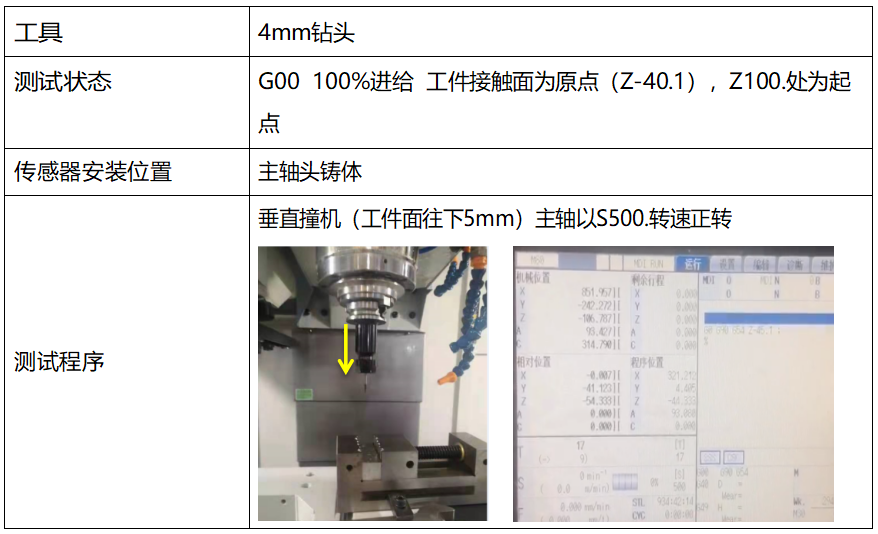
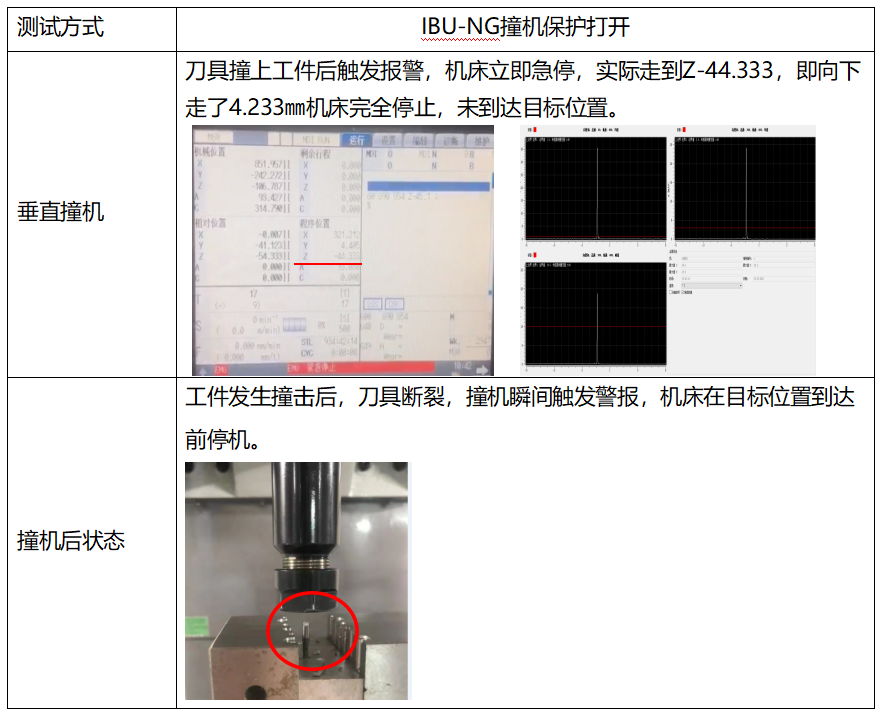
(4) 4mm Tool Collision (Vertical Direction, Spindle Rotating)
4. Effect Summary
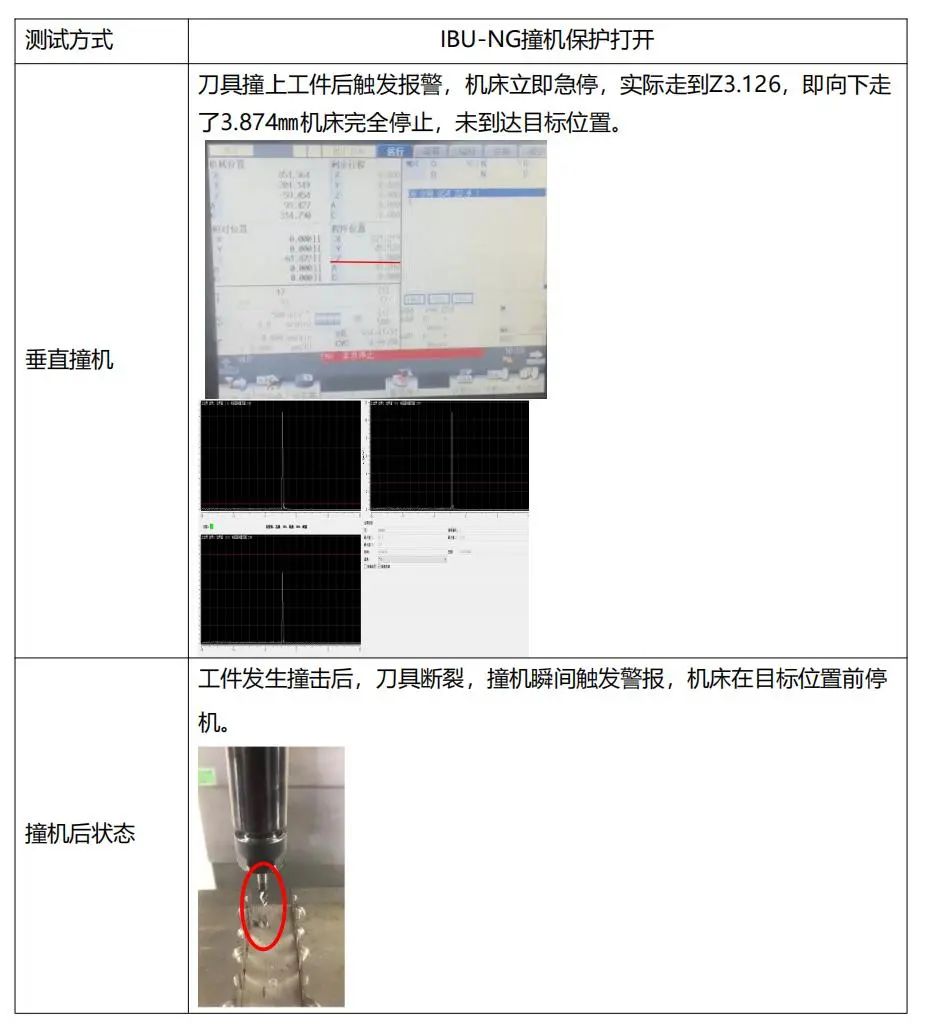
The main purpose of the test is to make a quantitative comparison of the IBU-NG collision protection system, reflecting the actual machine tool running protection effect with data. Including横向、纵向或其它方向的碰撞等。
Through the above actual measurement effects and data comparison, the following conclusions can be drawn:
①During faster or subtle collision processes of the machine tool, the IBU-NG collision protection system responds sensitively, causing the machine tool to make stopping actions in the shortest possible time, greatly reducing collision losses. This is a very good supplement to machine tool protection functions. The alarm record system has data logs, which is convenient for judging abnormal collision causes.
②The stopping distance after emergency stop of the machine tool is determined by the machine tool itself. This can be reflected in the test data. Machine tool system parameters can be optimized according to actual situations, and the stopping distance can be further shortened (with manufacturer guidance), reducing losses.
Welcome to follow MasterLink Cases
Learn from the details, think and practice
MasterLink is willing to join hands to create, build and share cases together
Scan code for case consultation and contribution